
Understanding financial challenges and coping strategies in migrants' journeys
About the Research
Understanding financial challenges and coping strategies in migrants journeys
Read Full Report
Project Goals
The aim of our research was to understand how refugees and migrants financially integrated into their host surroundings and how financial services played a role in that integration.

Key Findings
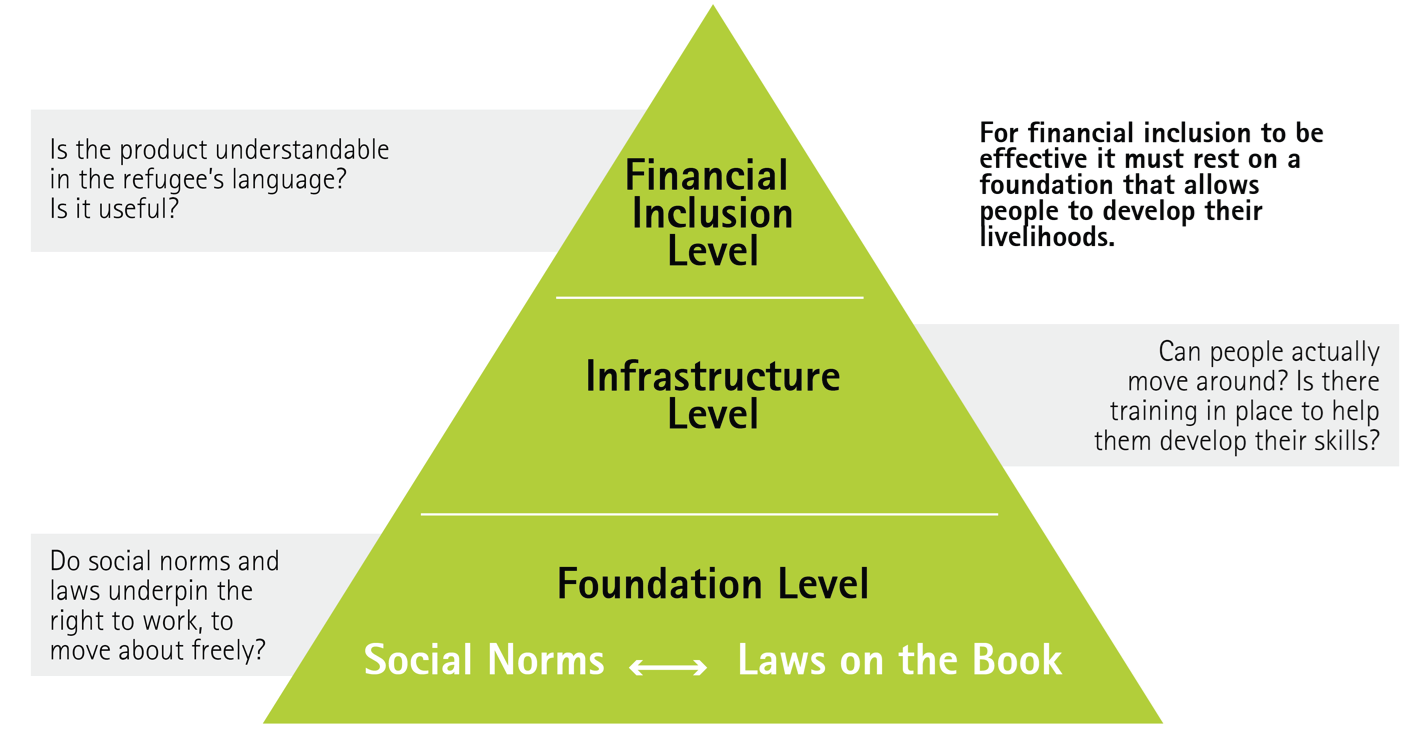
• For financial inclusion policies to make a positive impact, they must build on host government policies that give refugees rights, opportunities, and provide appropriate documentation.
• The need for and the uses of financial services co‐evolve with progressions in the diversification of refugee livelihoods.
• Financial service providers (remittance, mobile money, banking, and MFI services) need not create new services for refugees. Instead, they should adapt existing mainstream solutions that are popular with the host population by making necessary adjustments (such as language or documentation needs).
• The uncertainty of long‐term prospects discourages refugee investment in skills and assets, limits self‐reliance, and produces a permanent dependence on charity. Instead, they invest their energy in hoping for resettlement, a highly unlikely prospect for most.
• Our “financial health” framework modified for refugees is useful for analyzing the role of financial services in people’s financial health. We found that financial services are only one contributing factor to financial health.
Download the project papers
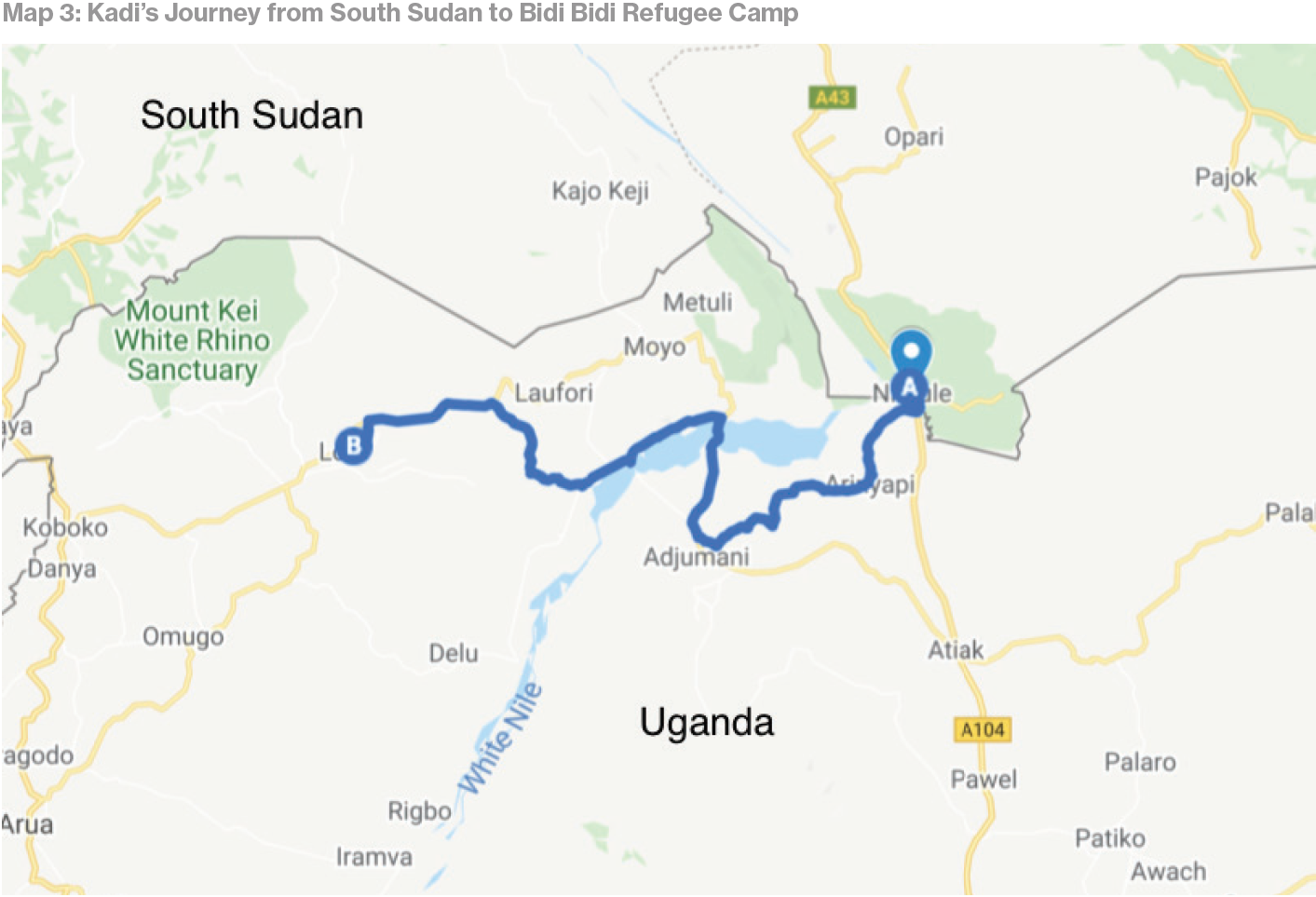
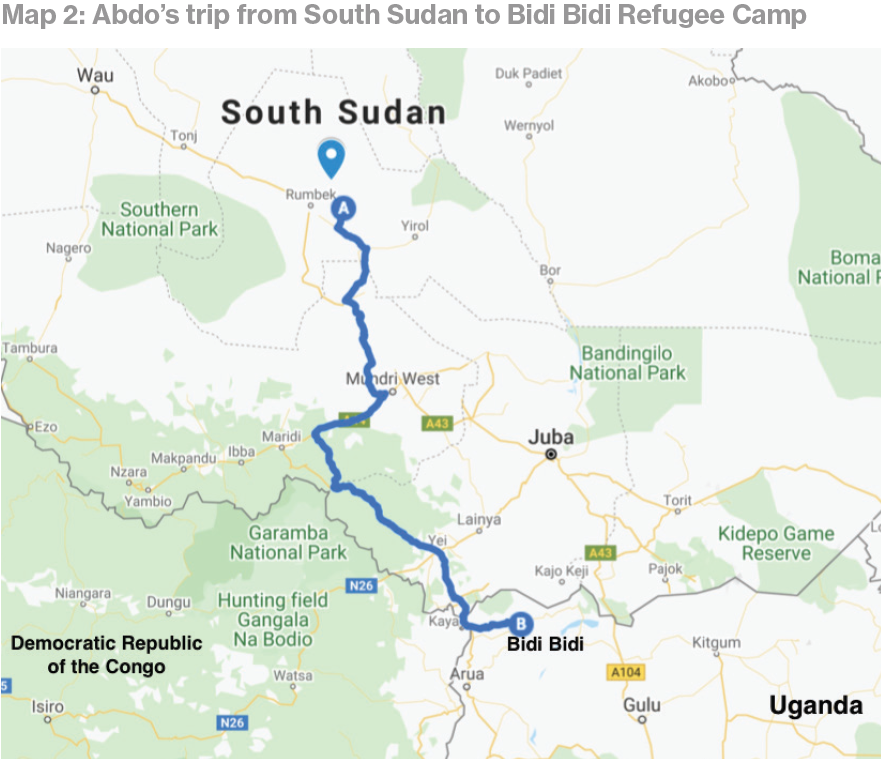
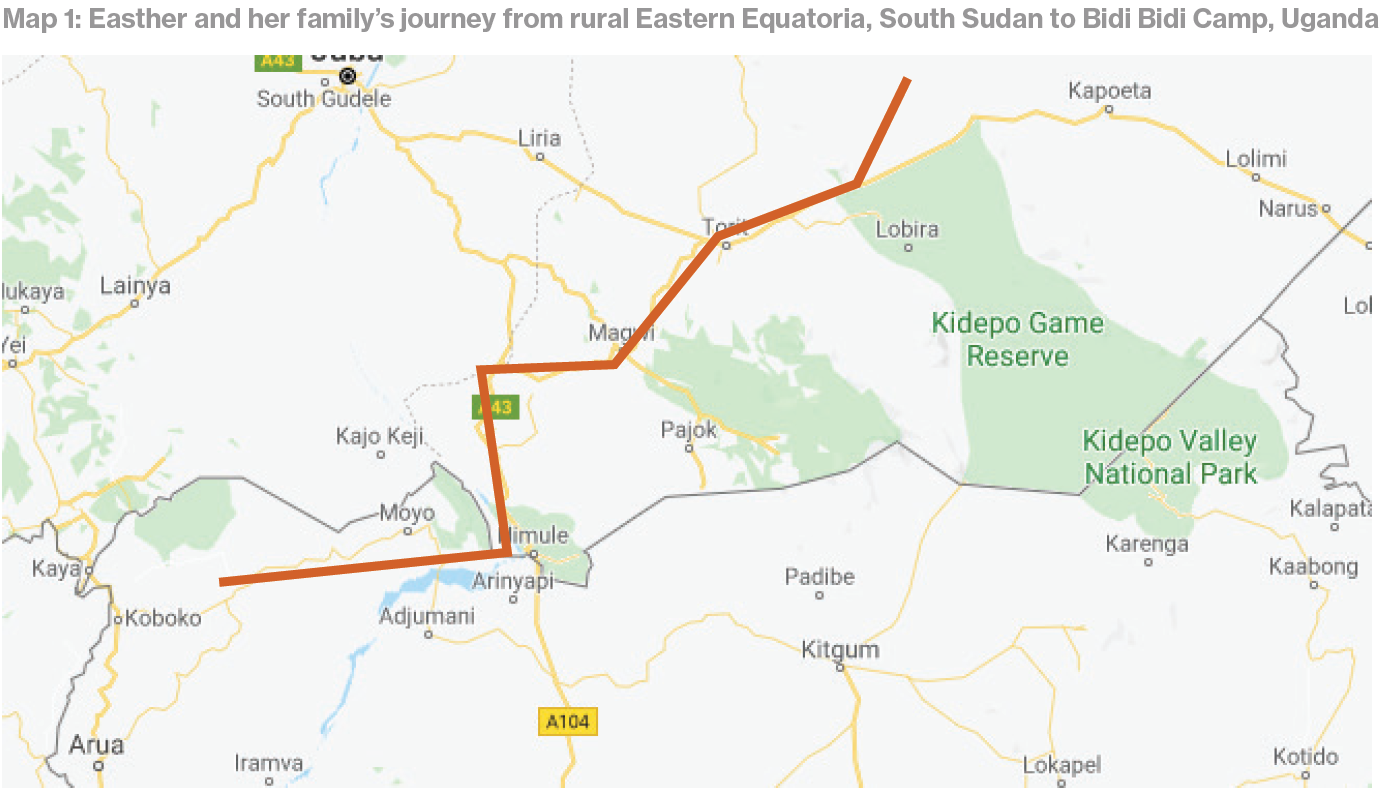
Featured Maps and Images

Student Engagement with FinD
Legal Analysis
Texas's Smuggling Statute - Misalignment with Reality
Qualitative Research
Capstone