
South Sudanese mother tries to earn enough to survive by supplementing her food rations with brewing liquor.
Like many South Sudanese women we interviewed... have since settled in Bidi Bidi as well. Easther began to sell high-proof liquor to survive. Despite Easther’s entrepreneurial spirit, to start another business requires capital that is out of reach.
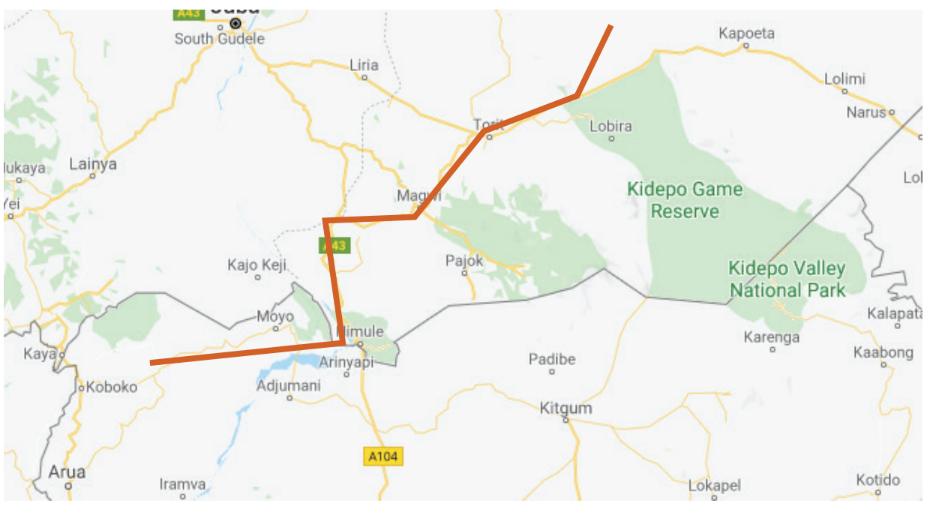
Easther fled her village in Eastern Equatoria when violence came to her doorstep. She and seven of her children fled together on foot and reached the Ugandan border after two days. Her husband was left behind in the chaos, though they have since reconnected in Uganda. They crossed the Nile to reach the border and paid 400 South Sudanese pounds ($3.24 now, closer to $100 at the time) for a boat to ferry them across. Easther said, “The captain was generous and only charged us passage for my oldest son and myself.”
“We came to Uganda in August 2016, I think. After crossing, we spent two weeks at a camp on the border, then spent a week at the camp near Moyo, then finally Bidi.”
Regardless of her occupation in South Sudan, Easther has become an entrepreneur of sorts in Bidi Bidi. Each refugee family in Bidi Bidi receives a plot of land to build a home on and grow some crops or raise animals. The land provided cannot produce enough food to sustain a family, so Bidi Bidi residents like Easther tend to grow what they can monetize or use to add flavor and nutritional value to their monthly food ration.
Easther grows maize on her plot, which is typical for Bidi Bidi. However, instead of eating or selling all the maize, she grows two types of grain. One variety is grown for sustenance, the other is used to brew high-proof liquor.
“I can brew a batch in maybe six days, that is about ten liters. I can make maybe 10,000 UGX ($2.71) from each batch, and I usually sell 500ml bottles for 500 UGX ($0.14). In a month, I can earn 30,000 UGX ($8.14) selling to my neighbors and some friends who know my product and visit me.”
This is a significant amount of money in cash-poor Bidi Bidi, and Easther uses her earnings to buy fresh vegetables in the nearby market. The monthly rations consist of maize, salt, oil, and similar staples that don’t provide much nutritional value, so the additional vegetables are crucial for her and her family’s well-being.
“The ration is not enough. We receive twelve kilos of maize every month, and I ground two kilos of it for flour and we eat the rest. When we didn’t receive rations in June, our situation became much harder. I had to take a loan from my savings group to buy food.”
In an interesting twist, our South Sudanese interpreter operates a similar business. He explained to Easther that he purchases moonshine from women all over Bidi Bidi and distributes it to vendors at the markets located in each Zone. The interpreter pays 35,000 shillings ($9.49) for each twenty-liter batch, a significant improvement over the prices Easther has been achieving. They exchanged contact information and planned to reconnect to discuss business.
I noted Easther’s entrepreneurial skills and asked why she doesn’t operate a stall of her own in one of Bidi’s markets. From our interpreter’s experience, it seems that selling from a market allows vendors to achieve higher prices than selling from one’s home. Easther responded:
“There isn’t enough money to support many businesses. It’s very hard to start a new business when so many already struggle to stay open. Also, I would need a lot of money, maybe 200–300,000 UGX ($54.24–$81.37), for capital for the business supplies. I don’t have this money, and I don’t know how I would get it.”
Easther belongs to a Rotating Savings and Credit Association (ROSCA) that was formed in the camp three years ago. The group was formed independently, but they received training from IRC in the VSLA model. Some consider this a superior model for its ability to add interest to savings and make more flexible loans than the traditional ROSCA model.
“We meet every week for the group, and I always save at least 500 shillings ($0.14) with money left over from the liquor business. In a year, I can make 100,000 shillings ($27) from my savings in the group. The group has grown, and we are now thirty members. After IRC taught us about VSLAs, we started making small loans. No member can take a loan of more than double their savings in the group, so we usually loan 30–50,000 shillings ($8.14–$13.56). It is usually the women who run businesses in the market who take loans for goods to sell.”
Although Easther has succeeded in starting her own business and providing for her family in Bidi Bidi, she does not feel happy about her situation.
“There has been no ‘best moment’ for me in Uganda; it has all been hard. It was good to have my husband meet us in Bidi after we were separated while we ran to the border.”
At one point, the interview is interrupted by a visibly drunken man who tries to speak to me and my interpreter. After a few minutes, Easther and the interpreter managed to convince him to let us finish the interview in peace. Easther remarked that the man was her husband, who has not worked since he reunited with the family in Bidi Bidi. After the interview ended, the interpreter noted that her reaction suggested that Easther’s husband’s intoxication is a regular occurrence. It’s unclear whether there is any connection between Easther’s business and her husband’s challenges with alcohol, but boredom and cheap moonshine fuel many of the conflicts in the camp.